
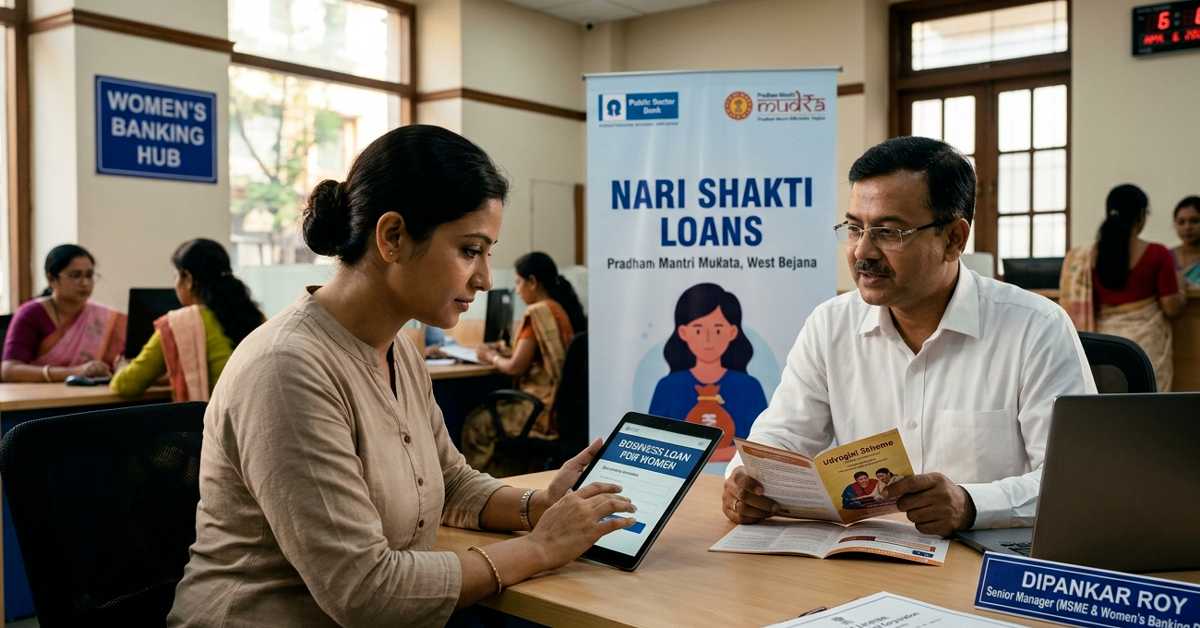
Getting a business loan as a woman involves choosing a scheme that matches the scale and nature of the venture. Several government-backed initiatives in India specifically target women entrepreneurs by offering lower interest rates, collateral-free options, or subsidies.
Government Schemes (Low Interest & Collateral-Free)
These are often the most accessible options for new or small-scale businesses:
- Mudra Yojana (PMMY): This is ideal for micro-enterprises. It is collateral-free and divided into three categories:
- Shishu: Loans up to ₹50,000 (for startups).
- Kishor: Loans from ₹50,000 to ₹5 Lakh.
- Tarun: Loans from ₹5 Lakh to ₹10 Lakh.
- Stand-Up India: Designed specifically for setting up “greenfield” (new) enterprises in manufacturing, services, or trading. It offers loans between ₹10 Lakh and ₹1 Crore. At least 51% of the shareholding must be held by a woman or an SC/ST entrepreneur.
- Udyogini Scheme: Aimed at women in rural and underdeveloped areas. It provides loans up to ₹3 Lakh with significant subsidies (up to 30-50% depending on the category) and often requires no collateral.
Specialized Bank Packages
Many public and private banks have dedicated “Mahila” (Women) loan desks with relaxed eligibility:
- Bharatiya Mahila Bank (BMB) Loans: Now integrated with SBI, these provide a concession of 0.25% on interest rates. They offer loans up to ₹20 Crores for manufacturing and collateral-free options up to ₹1 Crore under CGTMSE coverage.
- Stree Shakti Package (SBI): Available to women who own more than 51% of a business. It offers lowered interest rates if the loan amount exceeds ₹2 Lakh.
- Cent Kalyani Scheme (Central Bank of India): A dedicated scheme for women starting new ventures or expanding existing ones (except for retail trade, education, and self-help groups). No collateral or third-party guarantee is required.
Step-by-Step Application Process
- Draft a Business Plan: Banks will require a project report detailing your business idea, cost of machinery/stock, and projected profits.
- Check Eligibility: Ensure you meet the age (usually 18–65) and ownership (at least 51%) criteria.
- Gather Documents:
- KYC: Aadhaar card, PAN card, and Voter ID.
- Business Proof: Trade license, GST registration, or partnership deed.
- Financials: Last 6–9 months of bank statements (and ITR if it’s an existing business).
- Apply Online or In-Person: You can apply via the Udyami Mitra portal or visit the nearest branch of a scheduled commercial bank.
Summary of Loan Options
| Scheme | Max Loan Amount | Best For | Key Benefit |
| Mudra (Shishu) | ₹50,000 | Very small startups | No collateral, minimal paperwork |
| Udyogini | ₹3 Lakh | Small trade/SSI | High subsidy on loan amount |
| Mudra (Tarun) | ₹10 Lakh | Expanding small units | No collateral, competitive rates |
| Stand-Up India | ₹1 Crore | Large new projects | High funding for “Greenfield” units |
Tips to Improve Approval Chances
- Start Small: Mudra Shishu category has high approval rates for beginners.
- Get Training/Mentorship: Programs like Startup India Women Entrepreneurship Platform (WEP) or local MSME centers offer free guidance, which strengthens applications.
- Build a Track Record: Even informal income proof or group lending (SHGs) can help initially.
- Interest Rates & Terms: Government schemes often have capped/low rates (linked to MCLR/base rate + margin). Repayment 3–7 years typical.
- Common Pitfalls: Incomplete documents, weak business case, or poor credit. Lenders want to see realistic repayment from business cash flow.
- Women-Specific Edge: In India, schemes explicitly encourage lending to women, with banks having targets. Highlight women ownership.
For the latest details or eligibility in West Bengal (e.g., state-specific add-ons), visit official sites like myscheme.gov.in, standupmitra.in, mudra.org.in, or your nearest bank/MSME office. Consult a financial advisor or use portals for pre-checks. Success depends on your idea’s viability—many women have started successful ventures in retail, services, handicrafts, or food via these routes.